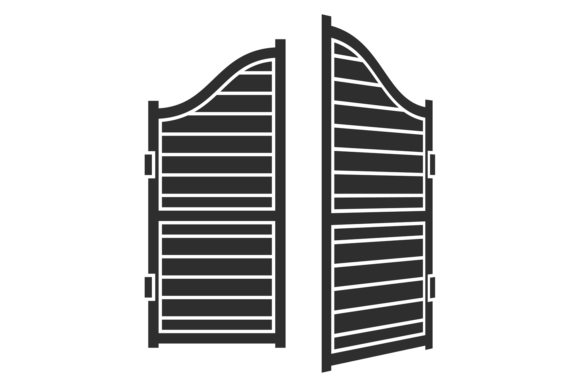
Saloon Doors Black Silhouette: Western S
As a designer who spends more time staring at stitch charts and fabric swatches than most people spend with their coffee, I have learned to be skeptical of any graphic that claims to be "simple." In the world of machine embroidery, simplicity is often a trap. A design that looks clean on a screen can become a tangled mess of thread if the density is off or if the negative space isn't handled correctly. That is why I approach every new asset, like the Saloon Doors Black Silhouette. Western S, with a critical eye. This isn't just about whether it looks cool; it is about whether it stitches well, holds up over time, and adds value to a finished product.
The Saloon Doors Black Silhouette. Western S arrives as an illustration, isolated on a white background in formats like EPS, JPG, SVG, and transparent PNG. Visually, it captures the quintessential American West vibe. The swinging doors are instantly recognizable, evoking images of dusty trails, saloons, and rugged individualism. But for us embroidery designers, the real question is how this graphic translates from a vector file into tangible thread. When I first laid eyes on this design, my immediate thought was not about the theme, but about the silhouette itself. Solid black shapes offer a distinct advantage in embroidery: they provide high contrast and clear definition, provided you choose the right background fabric.
Real-World Application: From Screen to Stitch
To truly evaluate this design, we need to put it to work. Let’s imagine a specific scenario. You are preparing inventory for an upcoming craft fair or updating your Etsy shop for the holiday season. You decide to create a line of western-themed custom apparel. The Saloon Doors Black Silhouette. Western S feels perfect for a vintage-style sweatshirt or a heavy-duty canvas tote bag. It has a bold, graphic quality that works exceptionally well for custom apparel because it doesn’t rely on subtle gradients or complex shading—elements that are notoriously difficult to replicate in thread.
When applied to a tote bag, this design becomes more than just decoration; it becomes a statement piece. The swinging doors suggest movement and entry, making it a clever metaphor for a business or a personal brand. For an Etsy seller or a small shop product owner, this kind of thematic clarity helps customers connect with the item quickly. It’s not just a picture of doors; it’s a symbol of hospitality, adventure, or perhaps a nod to classic Americana. When a customer sees this on a handmade product, they immediately understand the aesthetic. It fits seamlessly into collections aimed at ranchers, rodeo enthusiasts, or anyone who appreciates rustic decor.
I also see strong potential here for nursery decor or baby items. Imagine this silhouette embroidered on a cream-colored onesie or a soft blanket. The stark contrast of black thread against a light fabric creates a modern, minimalist look that appeals to contemporary parents. It transforms a traditional western motif into something chic and gender-neutral. This versatility is what separates a good embroidery project from a great one. The design allows you to pivot between rugged sweatshirt embroidery and delicate baby embroidery without losing its core identity.
Technical Considerations and Fabric Choices
However, beauty in design does not always equal ease in execution. There are specific areas where this machine embroidery design requires careful handling. The primary concern with any solid silhouette is stitch density. If the design calls for too much fill stitch in a small area, the fabric can pucker, or the needle can break. Before committing to a large production run, you must test the design on scrap fabric first. Pay close attention to the edges of the doors. Are they crisp? Does the thread lay flat, or does it bunch up?
Fabric choice plays a massive role in the final outcome. This design will perform beautifully on stable, woven fabrics like denim, canvas, or cotton twill. These materials provide the necessary structure to support the weight of the thread. Conversely, you should use caution with stretchy fabrics like jersey knits unless you are using a heavy-duty stabilizer. Without proper support, the tension of the stitch density can distort the garment, causing the doors to warp or look misshapen after washing.
Another critical factor is color contrast. Since the source file is a black silhouette, it assumes a dark thread on a light background, or vice versa. If you attempt to embroider this on dark fabric using black thread, you will lose all definition. You might consider using a contrasting thread color, such as cream or gold, to give the silhouette a different mood. However, remember that changing thread colors changes the visual impact. A black silhouette on a white hat offers a sharp, professional look, while a white silhouette on a black cap provides a glowing, neon-like effect depending on the sheen of the thread.
Where to Use Carefully
There are certain applications where this design might struggle. Small hoop sizes can be problematic if the design contains tiny details or intricate corners. While the silhouette is generally bold, ensure that the file you are using does not include unnecessary fine lines that could merge together during stitching. Textured fabrics, such as boucle or heavy terry cloth, can hide the details of the embroidery. The thread may sink into the fibers, making the doors look muddy rather than crisp.
Additionally, curved surfaces like caps present a challenge. While many machines handle caps well, a large, flat graphic like saloon doors might not conform perfectly to the curve of a baseball cap front. It might look better on a structured bucket hat or a flat-brimmed snapback where the surface is flatter. For embroidered patches, this design is excellent because the rigid backing supports the stitching, allowing for finer details and cleaner edges.
Design Assets and Commercial Potential
For those selling design assets or creating digital embroidery files, the value of this image lies in its adaptability. It serves as a strong base for layering. You could add text above or below the doors, such as "Open" or "Closed," turning the functional aspect of the doors into a playful message. This kind of customization increases the perceived value of your finished product. Customers love personalized items, and adding a name or date to this western scene makes it a memorable personalized gift.
When evaluating this for commercial use, always confirm the licensing terms. Even though the file comes in standard formats like SVG and PNG, the rights to sell physical items made from it vary by creator. As a professional, I never assume permission. Check the documentation. If you are an illustrations curator or a graphic designer expanding into embroidery, this asset bridges the gap between digital art and tactile craft. It allows you to offer a wider range of products, from printable mockups for clients to actual stitched goods for retail.
In conclusion, the Saloon Doors Black Silhouette. Western S is a versatile, visually striking asset that brings a strong western flair to embroidery projects. Its strength lies in its boldness and simplicity, which translates well to thread when paired with the right fabric and stabilizer. By testing thoroughly, respecting stitch limits, and choosing appropriate backgrounds, you can turn this simple graphic into a high-value commodity. Whether you are decorating a kitchen towel for a housewarming gift or branding a line of boutique apparel, this design offers a reliable foundation for creativity. It reminds us that sometimes, the simplest shapes tell the loudest stories.